
Hard Water Spots in Nevada: Prevention, Removal and When It Is Too Late
Southern Nevada has some of the hardest water in the country. Here is what it does to paint and glass, and what it takes to fix.
Why it happens here more than anywhere
Southern Nevada water carries a heavy mineral load. When a droplet dries on a hot panel, the water leaves and the minerals stay. On a 110-degree afternoon that happens in seconds, which is why rinsing a car in the sun makes it look worse.
Fresh spots
A spot sitting on the surface is easy. A dedicated water spot removal treatment, which we charge $75 for, lifts the minerals off paint and glass without touching the clear coat.
Etched spots
Leave it long enough and the minerals eat into the clear coat, leaving a crater you can feel. That is no longer a cleaning problem: it needs machine polishing to level the surrounding clear coat. Our two-step paint correction includes hard water spot removal for exactly this reason.
Preventing it
- Wash in shade or early morning, never on hot panels.
- Dry immediately and completely. Air-drying is where most spotting happens.
- Aim sprinklers away from the driveway, or adjust the timer.
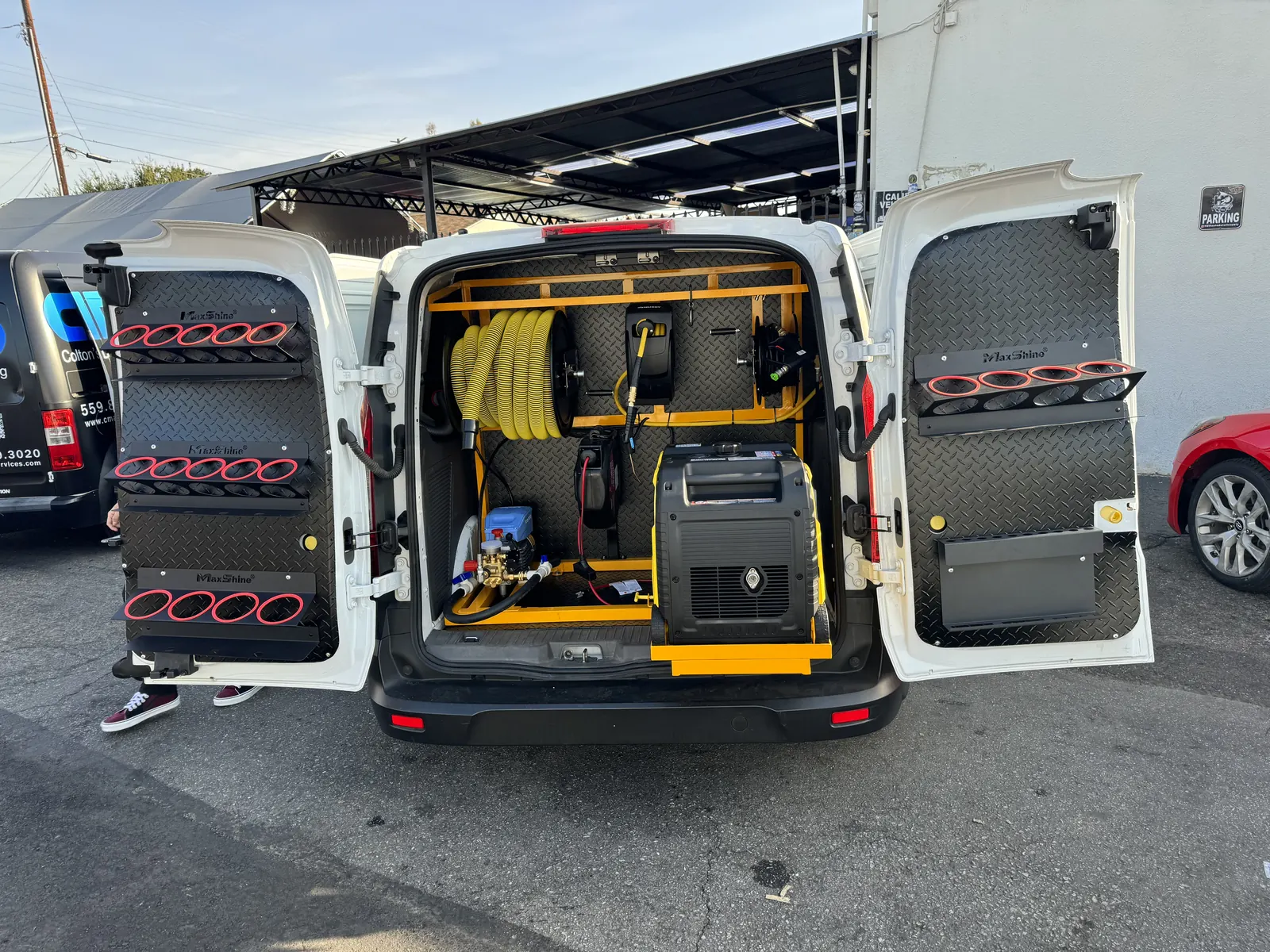
- Use deionized water, which is what we carry in the van, so a rinse leaves nothing behind.
- Keep protection current. Sealed or coated paint holds water in beads that run off rather than flat films that dry in place.
Glass is worse than paint
Windshields and side glass take the worst spotting because they are flat and hot. Glass also tolerates polishing well, so even heavy spotting is usually recoverable.
The rule of thumb
If you can feel the spot with a fingertip, it is etched. If you cannot, you are still in cleaning territory, and it is a $75 fix instead of a correction.
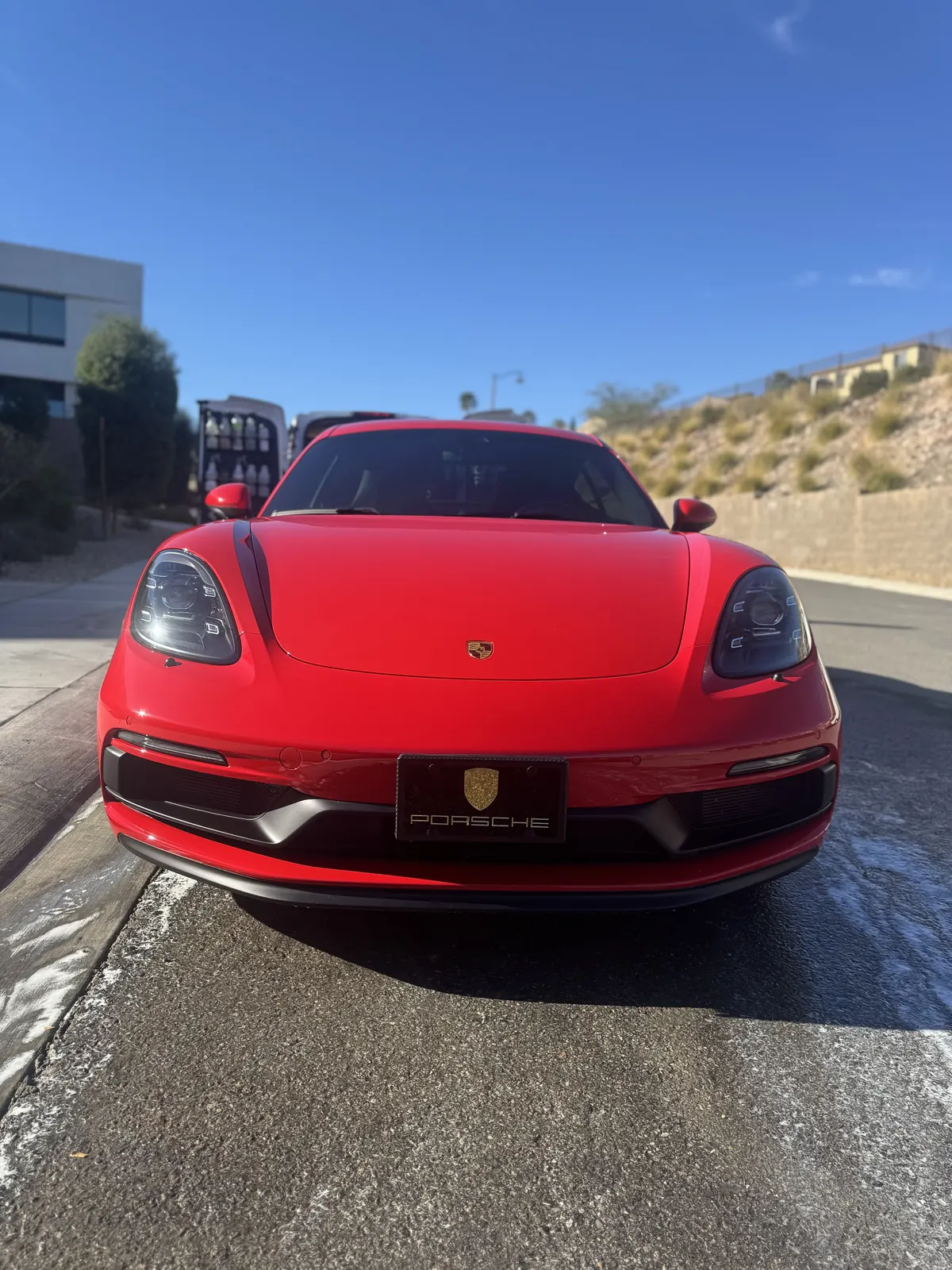
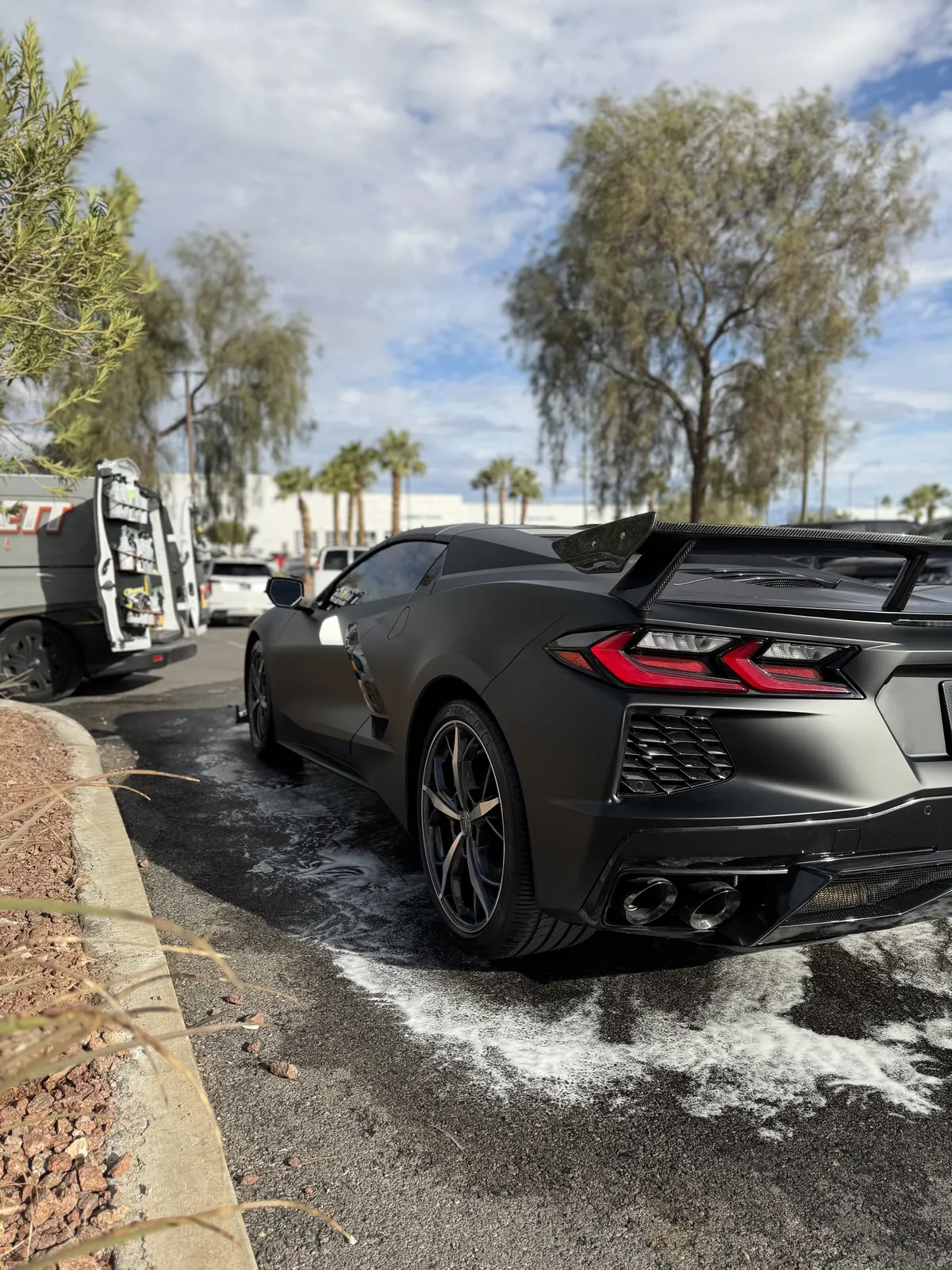
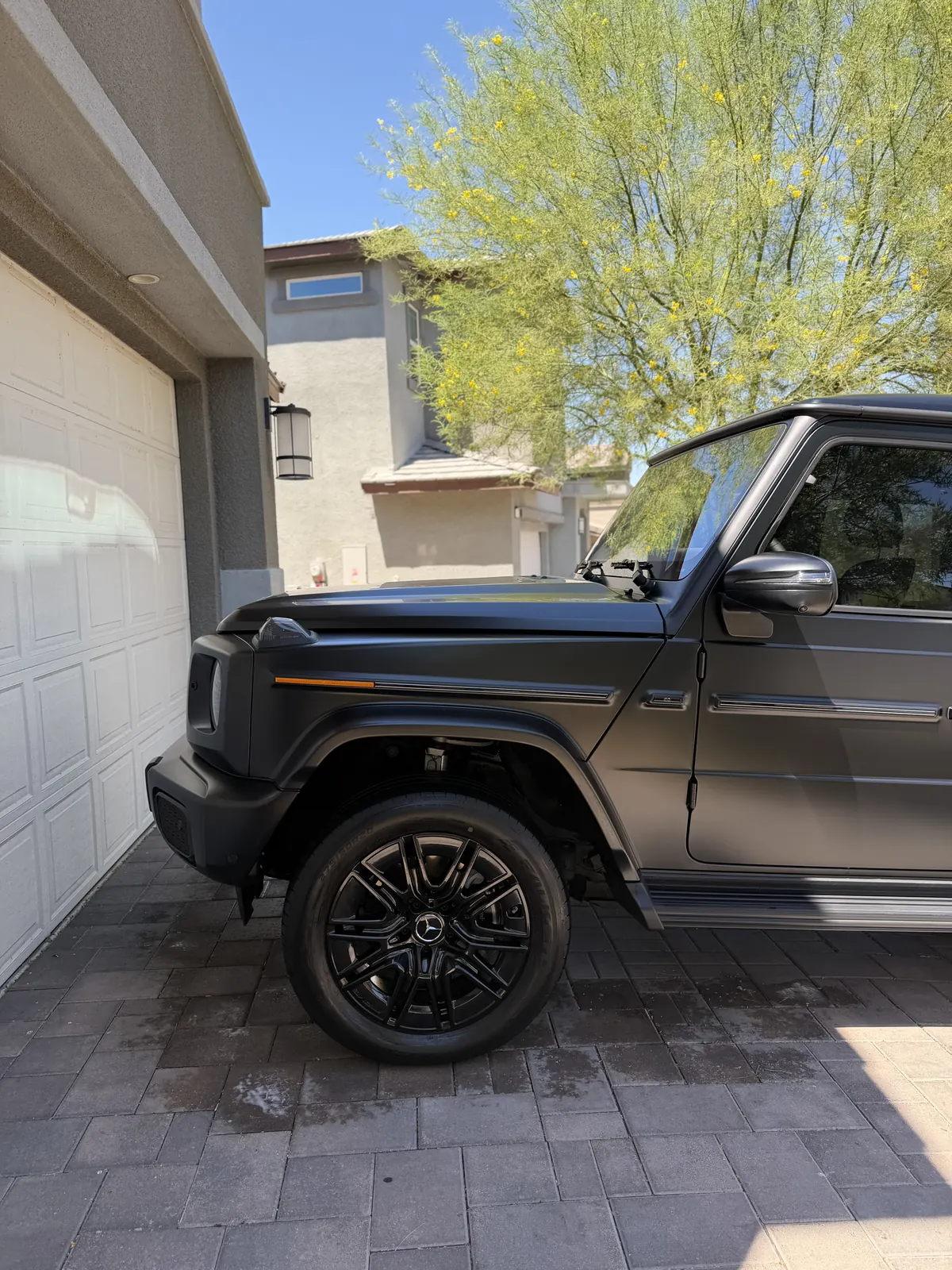
Recent work
Spots already showing?
Send us a photo and we will tell you whether it is a $75 treatment or a correction job.